

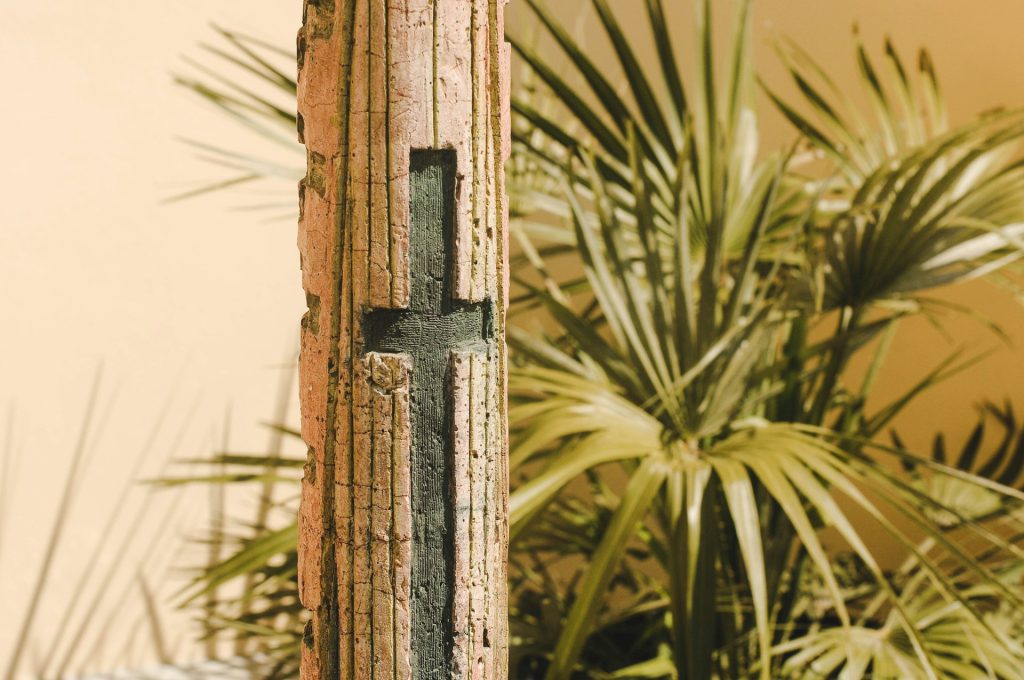
You probably know the scene: branches tossed along the road, a crowd shouting “Hosanna,” a man on a donkey riding straight into a city that would soon turn against him. But there’s a difference between knowing the facts and sitting with the tension of Palm Sunday. Maybe you’ve sat in church, palm cross in hand, feeling a strange ache in your chest. The joy feels borrowed when you already know what’s coming. That tension isn’t a mistake; it’s the heart of the story.
If you’ve ever found yourself stuck between wanting to celebrate and bracing for heartbreak, you’re not outside this story; you’re right in the middle of it. NowAskJesus was created for questions that surface in moments like these, when faith and ache blur together.
Let’s walk through Palm Sunday and the days that follow, taking our time with scripture and honest questions. You’ll see what each Gospel says about the triumphal entry, why the donkey and palm branches matter so much, and how the journey from celebration to the cross still hits close to home. Maybe by the end, you’ll find a quieter place inside yourself to hold both the Hosanna and the silence that follows.
What Palm Sunday Commemorates
Palm Sunday marks the moment when hope stepped into the open and heartbreak started to count down. If you’ve ever trusted someone only to watch things unravel, you already get the weight this day carries for people around the world.
What Is Palm Sunday and Why It Matters
Palm Sunday remembers the triumphal entry of Jesus Christ into Jerusalem, when crowds lined the road with cloaks and branches, shouting for the Son of David. All four Gospels record the event: Matthew 21:1-11, Mark 11:1-11, Luke 19:28-40, and John 12:12-19. Each writer notices different details, but the main thing is clear: the crowd believed their King had come.
What stings is knowing the praise won’t last. The same voices that cheered would soon fall silent, and some would even call for crucifixion. Palm Sunday doesn’t let you separate joy from suffering. It holds both, the way life often does.
When Palm Sunday Falls in the Christian Calendar
Palm Sunday always lands on the Sunday before Easter, closing out the Lenten season that starts on Ash Wednesday. Lent is about forty days of reflection, fasting, and repentance. Palm Sunday signals that the long stretch of preparation is almost over.
The date shifts each year since Easter follows the lunar calendar. In Western Christianity, Palm Sunday can fall anywhere from mid-March to mid-April. In 2026, it lands on March 29. No matter the date, the weight stays the same; this day opens the most intense week in the Christian calendar.
How Palm Sunday Opens Holy Week
Palm Sunday opens Holy Week, sometimes called Passion Week. From here, everything speeds up toward the cross and the empty tomb. Monday through Wednesday bring confrontations in the temple, parables, and the quiet start of betrayal. Thursday holds the Last Supper. Friday brings the crucifixion. Saturday is just silence. Sunday, everything changes.
Palm Sunday can’t be separated from what comes after. The parade is only the beginning, the first step on a path that runs through the meaning of sin and sacrifice before reaching resurrection. So what happened when Jesus entered the city?
Jesus Enters Jerusalem
The crowd’s cheers were real. Their hope was real. And Jesus rode straight into a city that would turn on him in less than a week. If you’ve ever walked into a situation knowing it would cost you, you get a glimpse of what this entry meant.
The Triumphal Entry in the Gospels
Each Gospel gives a different angle on the scene. Matthew focuses on prophecy and the city’s reaction. Mark ends with Jesus quietly looking around the temple and leaving for Bethany. Luke remembers Jesus weeping over Jerusalem. John points out that the disciples didn’t understand any of it until later.
| Gospel | Key Passage | Unique Detail |
|---|---|---|
| Matthew | Matthew 21:1-11 | The whole city was “shaken” and asked, “Who is this?” |
| Mark | Mark 11:1-11 | Jesus looked around the temple, then left quietly |
| Luke | Luke 19:28-44 | Jesus wept over Jerusalem as He approached |
| John | John 12:12-19 | The Pharisees said, “The whole world has gone after Him” |
These aren’t rival stories. They’re four people standing on different corners of the same street, noticing what they notice.
Bethphage, the Mount of Olives, and the Road into the City
Jesus started his approach from Bethphage, near the Mount of Olives east of Jerusalem. He sent two disciples ahead to find a donkey and a colt, with clear instructions: “If anyone asks, say the Lord needs them.” The donkey was waiting, just as he said.
The Mount of Olives meant a lot in Jewish hopes. Zechariah 14:4 talks about God standing on that mountain on the day of the Lord. By starting there, Jesus made a claim the crowd couldn’t miss. He wasn’t sneaking in; he arrived as the one they’d been waiting for.
Why the Crowd Cried Hosanna
“Hosanna to the Son of David! Blessed is He who comes in the name of the Lord!” They borrowed those words from Psalm 118:25-26, a song they knew by heart. “Hosanna” means “save us, we pray.” It’s both a plea and a praise.
The people weren’t just singing; they were desperate. Rome ruled over them. Taxes were harsh. Their temple felt compromised. When they shouted “Hosanna,” they meant it with every bit of hope and frustration they carried. They wanted a king who’d kick out the empire. What they got was a king who’d defeat death, but only by dying first. That gap between what they hoped for and what Jesus actually did, that’s the ache at the center of Palm Sunday.
Why the Donkey, Palms, and Praise Matter
Every detail in the triumphal entry carried a meaning the crowd only half-grasped, and maybe you’re still wrestling with it, too. If you’ve ever received an answer to prayer that looked nothing like what you asked for, you know how unsettling God’s faithfulness can be.
Zechariah 9:9 and the Promise of a Humble King
Centuries before Jesus, Zechariah wrote: “See, your King comes to you, righteous and victorious, humble and riding on a donkey, on a colt, the foal of a donkey” (Zechariah 9:9). A king on a donkey meant peace, not war. On a warhorse, it meant conquest. Jesus chose the path of peace and sacrifice.
Matthew quotes this prophecy to make the point clear for his Jewish audience. Jesus wasn’t making it up as he went. He fulfilled a promise so old most people had stopped believing it would ever come true.
Palm Branches as Signs of Honor, Hope, and Misunderstanding
Palm branches meant a lot in Jewish culture: victory, triumph, national pride. During the Maccabean revolt, people waved palms when the temple was rededicated. The crowd’s gesture was as political as it was spiritual. They wanted a deliverer.
- Victory: Palms waved for conquering heroes
- Worship: Branches used in the Feast of Tabernacles
- Hope: A longing for Israel’s restoration
- Misunderstanding: They expected a military king, not a suffering servant
Many churches today still hand out palm branches and later burn them for Ash Wednesday the next year. The cycle of celebration, suffering, and repentance repeats because we keep needing it.
What the Crowd Expected and What Jesus Came to Do
The crowd wanted freedom from Rome. Jesus offered freedom from something deeper. Luke 19:10 sums up his mission: “The Son of Man came to seek and to save the lost.” Their hopes and his purpose aimed in different directions.
This gap is where a lot of people struggle. You pray for relief and get perseverance. You hope for rescue and get presence. Understanding salvation sometimes means realizing God’s answer doesn’t look like what you pictured. That was true on the road into Jerusalem, and it’s probably true in your life, too. So, if the parade was just the start, what happened next?
From Celebration to Betrayal
The distance from praise to betrayal can be heartbreakingly short. If you’ve ever been celebrated one day and forgotten the next, you know a tiny bit of what this week held.
Why Palm Sunday Cannot Be Separated from the Last Supper
On Thursday after Palm Sunday, Jesus gathered his closest friends for a meal that would become the foundation for communion. He broke bread: “This is my body, given for you.” He poured wine: “This is my blood of the covenant, poured out for many for the forgiveness of sins” (Matthew 26:26-28).
The same hands that accepted palm branches on Sunday held broken bread on Thursday. The Last Supper wasn’t a separate event; it was the private heart of what the public parade had pointed to. Guidance that comes quietly in real life often works the same way: the answer comes not in the spotlight, but in a moment that meets you where you are.
The Shadow of Judas and the Garden of Gethsemane
Judas Iscariot sat at that table, ate the bread, heard the words, and then left to betray Jesus for thirty pieces of silver. The pain of betrayal runs through this story like a wound that never quite closes.
After supper, Jesus walked to the Garden of Gethsemane. He asked his friends to stay awake and pray, but they fell asleep. He prayed alone, sweating drops like blood, asking if there was another way. There wasn’t. Judas showed up with soldiers. The arrest came in the dark, sealed with a kiss.
How the Road of Praise Leads Toward Good Friday
From the garden, everything moved fast: trials before the Sanhedrin, Pilate, Herod. Beatings. Mockery. The crowd that shouted “Hosanna” turned into a crowd demanding “Crucify Him.” By Friday afternoon, Jesus hung on a cross outside the city (John 19).
The road from Palm Sunday to Good Friday isn’t a detour. It’s the same road. Palm branches on the ground and nails in His hands belong to one story. If you’ve ever wondered how something that looks like sin could sit right next to something that feels like grace, this week is proof that God moves through both. The cross wasn’t the end, though. Something waited beyond Saturday’s silence.
What Happens Through the Rest of Holy Week
The hardest part of grief is the waiting. Holy Saturday faces that reality head-on.
The Silence and Weight of Holy Saturday
After the crucifixion, nothing happened. No angel. No voice from heaven. Jesus’ body lay in a borrowed tomb, and His followers sat in a silence so heavy it probably felt like the end of everything they believed.
If you’ve ever prayed and heard nothing, or waited for God to show up and felt only stillness, you’ve lived your own Holy Saturday. Silence doesn’t mean absence. There’s waiting and hope even in the quiet. The story isn’t finished yet.
Why the Empty Tomb Changes Palm Sunday
On Easter morning, women went to the tomb expecting to anoint a body. The stone was rolled away. The tomb was empty. An angel said, “He is not here; He has risen” (Luke 24:6).
The resurrection rewrites every moment of Holy Week. The donkey wasn’t just politics; it was a King arriving to conquer death. The palm branches weren’t misplaced; they were simply early, laid down before the victory. The cross wasn’t a defeat. It was the cost of a salvation that changes everything.
Reading the Week as One Story of Redemption
Palm Sunday, the Last Supper, Gethsemane, Good Friday, Holy Saturday, Easter, they aren’t just scattered holidays. They’re one continuous story about a God who stepped into human suffering, carried it to death, and walked out alive.
When you see the week as a single arc, the Hosannas don’t sound naive. They sound like the start of a promise that took a whole week to unfold. So, where do your own questions fit inside this story?
When Your Own Questions Meet This Week
Palm Sunday isn’t a museum piece. It meets you right where you are, especially if your faith feels shaky or your heart is tired.
What Palm Sunday Says to Doubt, Forgiveness, and Weariness
If you’re carrying doubt, you’re not alone. The disciples saw the triumphal entry and still didn’t get it (John 12:16). If you’re holding onto unforgiveness, this week gives you a Jesus who forgave from the cross. If you’re just weary, this is a story about a God who kept walking toward the hardest thing and didn’t turn back. When the questions pile up, you can pray through this week alongside others carrying their own.
Discernment in your spiritual life might actually start with admitting you don’t have it all figured out. Palm Sunday lets you wave a branch and carry a question at the same time.
Why Jesus Wept over Jerusalem and Why That Matters to You
Luke 19:41-42 shares something the other Gospels skip. As Jesus approached Jerusalem, He wept. “If you, even you, had only known on this day what would bring you peace, but now it is hidden from your eyes.” He wasn’t crying for Himself. He was crying for a city that couldn’t see what it needed most.
If you’ve ever felt unseen or misunderstood, this passage matters. Jesus sees the gap between what you need and what you’re reaching for. His tears over Jerusalem show a love that doesn’t look away.
A Quiet Next Step for the Questions You Carry
The week between Palm Sunday and Easter holds space for every kind of question: angry ones, grieving ones, the ones you keep to yourself. If the Hosannas remind you that you once believed more easily, or the silence of Saturday feels familiar, that’s okay.
You don’t have to carry your questions alone. You can bring your questions to NowAskJesus and get a response grounded in scripture, privately, whenever you need it. Start with three free questions. No record, no judgment. There’s room for what you’re carrying.
Frequently Asked Questions
When Your Heart Feels Split Between Celebration and Sorrow, What Are You Really Remembering on This Day?
You’re remembering a day when real praise and approaching death sat side by side. Palm Sunday holds joy and grief together because the story needs both. The crowd’s celebration was real, and so was the cross at the end of the week.
Why Does Scripture Say People Laid Down Palm Branches, and What Does That Mean for the Weary Faith You Carry?
Palm branches were old symbols of victory and hope. The crowd laid them down to honor a king they hoped would deliver them. For you, the palms remind you that faith can be an act of hope even when you don’t fully get what God is up to.
Which Gospel Passages Should You Sit With When You Want a Scripture-Grounded Account of Jesus Entering Jerusalem?
Matthew 21:1-11, Mark 11:1-11, Luke 19:28-44, and John 12:12-19 each tell the story a bit differently. Luke’s version stands out because it shows Jesus weeping over the city, a moment of raw emotion you might recognize in your own prayers.
If You Feel Doubt or Even Shame About Calling Jesus “King,” How Can You Read This Day Honestly Before God?
The disciples themselves didn’t really understand what the triumphal entry meant until after the resurrection (John 12:16). Doubt doesn’t push you out of the story. You can hold a palm branch and an honest question at the same time.
In the Catholic Tradition, What Is Happening in the Liturgy, the Readings, and the Blessing of Palms, and Why Does It Matter?
Catholic Palm Sunday liturgies start with a procession and blessing of palms, then shift to reading the full Passion story. This mirrors the emotional arc of the day, moving from celebration into suffering. The blessed palms are kept and later burned for Ash Wednesday.
When You Are Seeking Rest, How Do You Hold the Joy of “Hosanna” Alongside the Shadow of the Cross That Is Already Coming?
You hold them the same way you hold your own life, by not pretending one cancels out the other. “Hosanna” means “save us,” which is both a shout of praise and a cry for help. You’re allowed to worship and ache at the same time. That’s where real faith lives.
The Parade Has Not Ended. It Is Still Walking Toward You.
Palm Sunday isn’t a memory frozen in stained glass. It’s a week-long walk through praise, silence, suffering, and resurrection that echoes your own spiritual life. The same Jesus who rode into Jerusalem, knowing what it would cost, still meets you in the questions you carry after midnight.
If something here stirred what you haven’t said out loud, there’s space for it. NowAskJesus is private, scripture-based, and open right now. Ask your first question free. Bring what’s on your heart. The Word has been waiting.